


6 Major Advantages Microsoft Ads Has Over Google Ads
Six huge advantages Microsoft Ads (Bing Ads) has over Google, including lower CPCs, Copilot ad placements, LinkedIn targeting, and more.


We improve your ad performance by blocking click fraud and fake emails



Click fraud is costing advertisers billions in loses. Learn more here.

Click fraud is costing advertisers billions in loses. Learn more here.


Read our in-depth study by independent research firm Juniper Research.


Google Ads campaigns are vast, running across Search, Performance Max, Shopping, Display, and more. Each of these has its own levers, strategies, and considerations; you need to improve your Quality Score, manage bids, track competitor keywords, and test new variations. Staying on top of all this across a live account can get overwhelming.
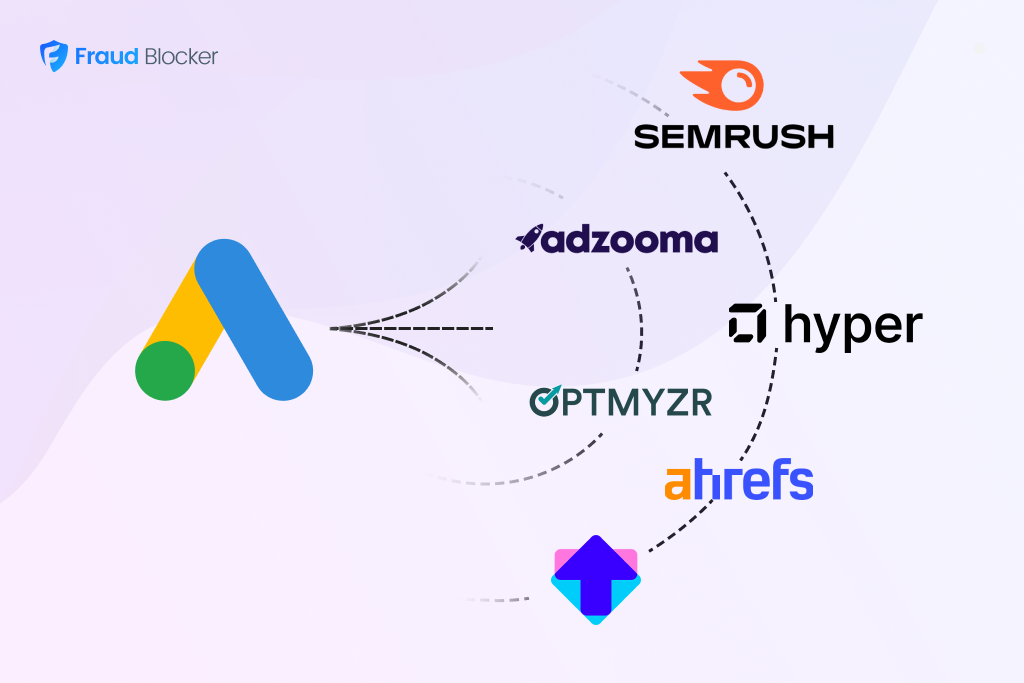
The right tools can simplify most of these tasks for you, helping you identify gaps, surface recommendations, and even execute strategies on your behalf. This guide covers the best tools for optimizing every level of your Google Ads, plus a recommended stack for your team size.
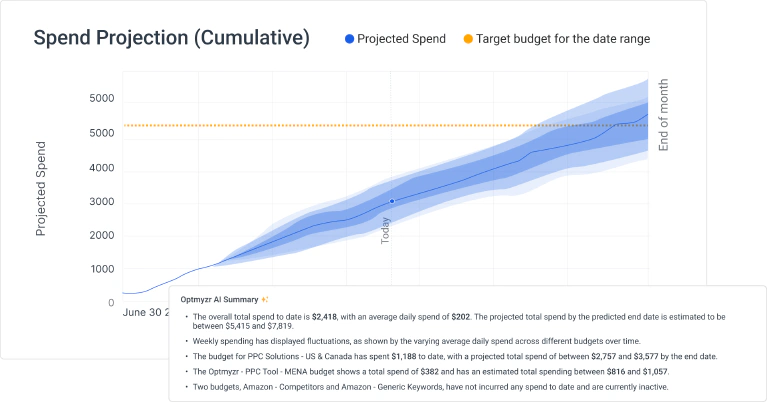
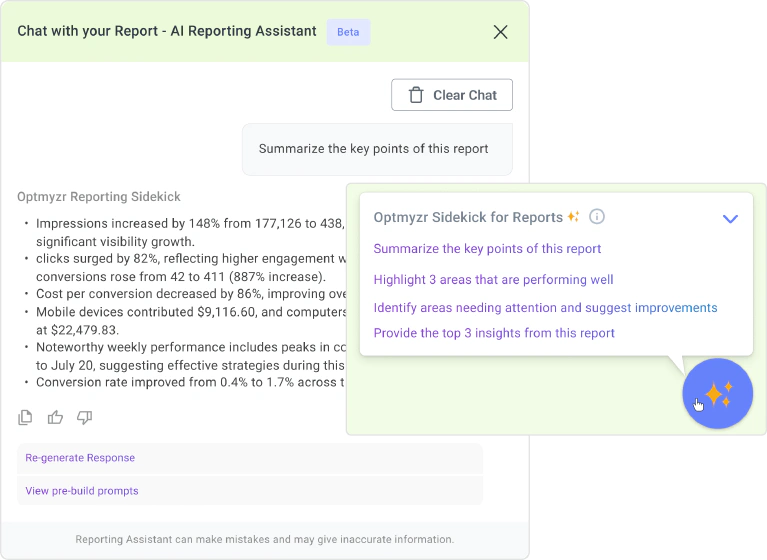
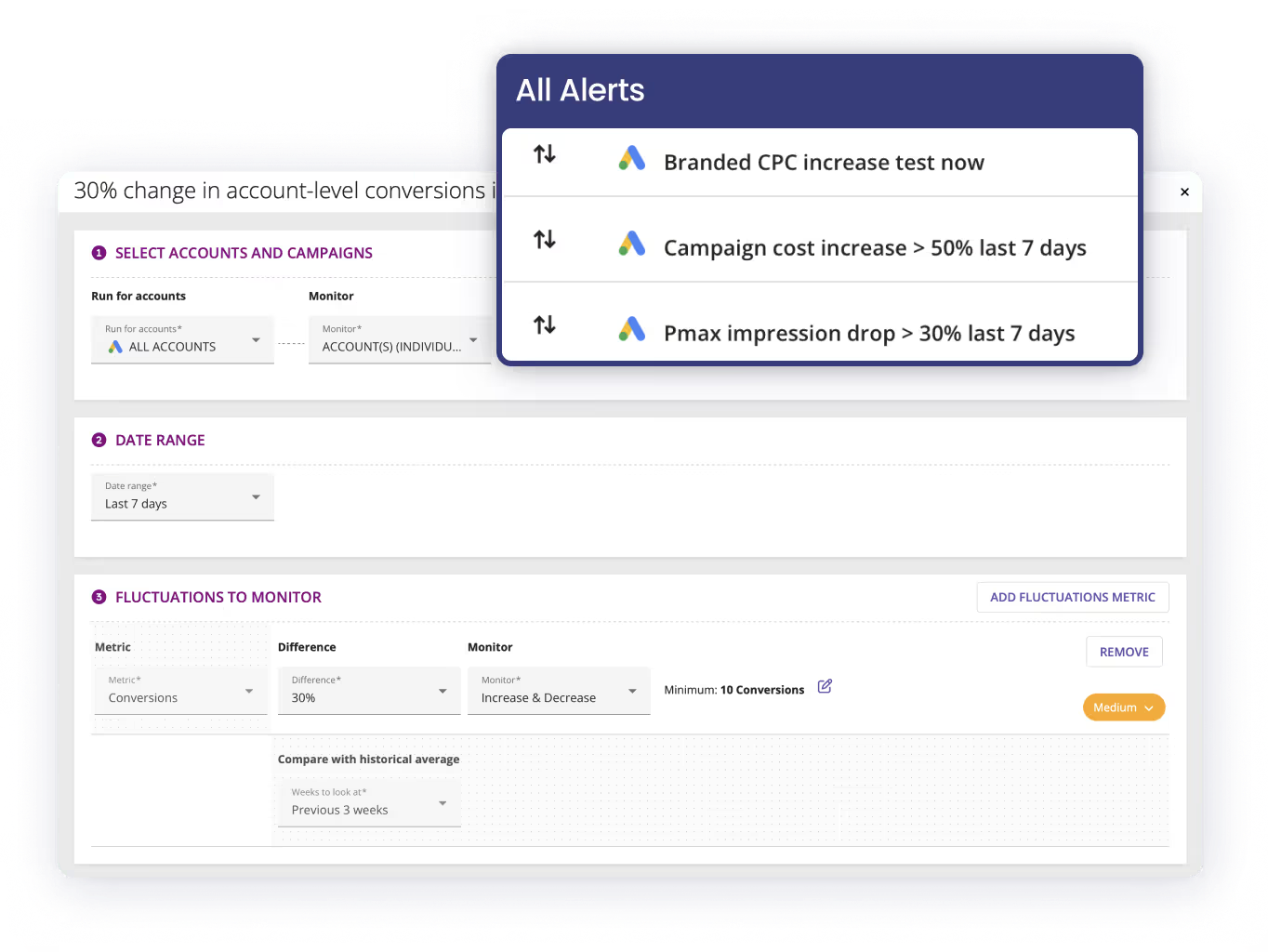
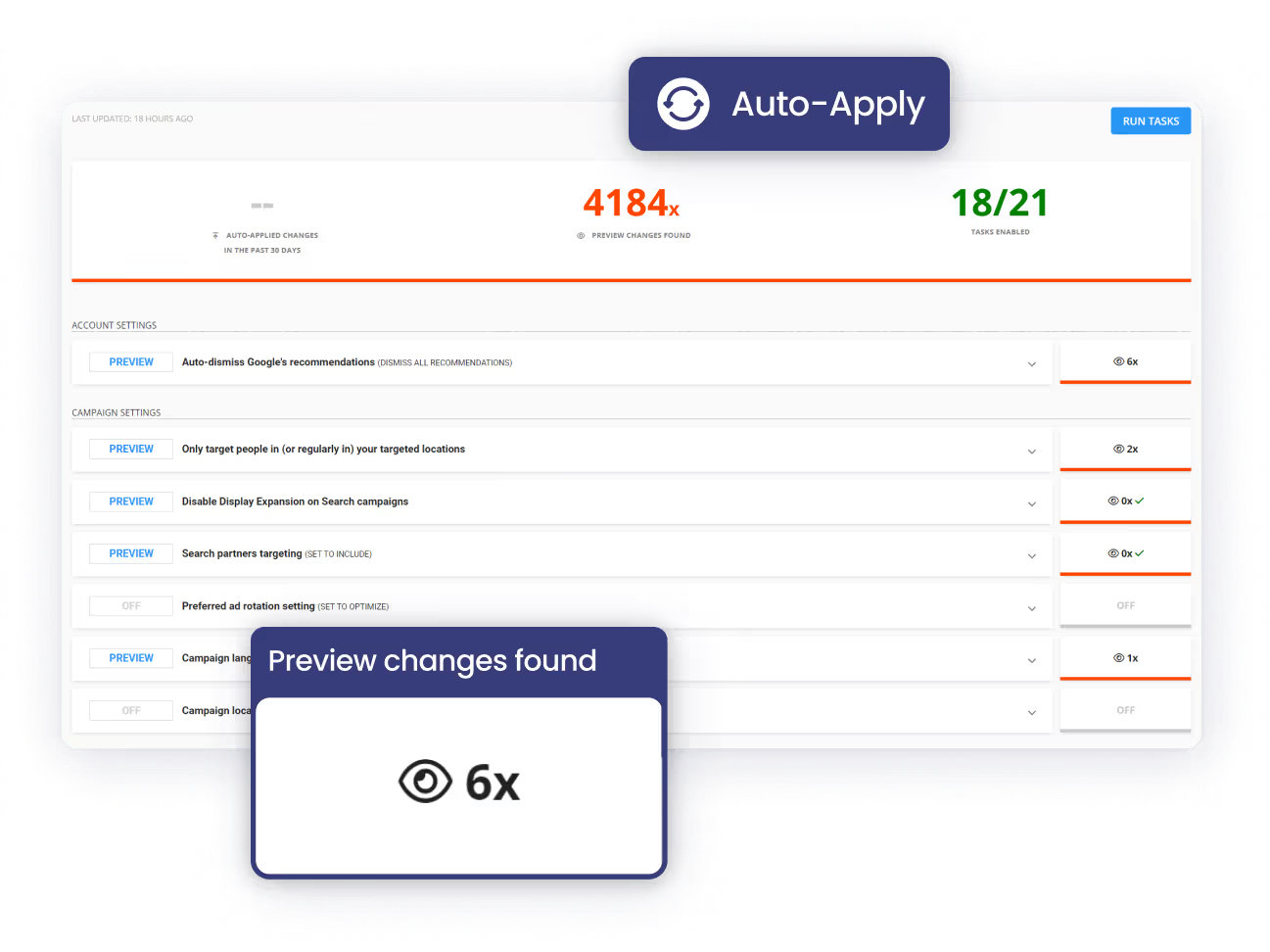
Built by former Google employees, Optmyzr is designed for teams managing several accounts at scale. It has a rule-based engine that lets you set specific conditions, e.g., “If CPA exceeds $X, reduce bid by Y%,” which is much easier than having to manually check bids, budgets, and ad performance.
Optmyzr is particularly great because it only presents recommendations and doesn’t implement changes without your team’s approval. That makes it valuable if you’re running tests or counterintuitive strategies that require a hands-on approach.
Beyond bid management, it also covers ad testing, budget pacing, Quality Score tracking, and account auditing.
Opteo is a more hands-off tool than Adalysis and is better suited for smaller teams or solo advertisers.
The benefit of Opteo is that it offers simple recommendations on the results of your ad testing. Great if you need the cliff notes (what’s working and what’s not) without getting too in the weeds about granular details. Opteo also offers 40+ other ad recommendations across your bids, keywords, ad copy, Shopping, and more.
| TOOL | BEST FOR | PRICING | WHY IT'S A GOOD ALTERNATIVE |
|---|---|---|---|
| TheOptimizer | Agencies managing campaigns across multiple traffic sources beyond just Google | From $199/month | 24/7 account monitoring with alerts that flag issues as they arise |
| Birch (Formerly Revealbot) | Agencies running rule-based automation across multiple clients and platforms | From $49/month | Great for testing creatives and automated rule-based management. |
Adalysis is excellent for advertisers who want rigorous, statistically grounded ad testing. When you create ad variations in Google Ads, Adalysis monitors performance data across all variations and shows you the top performer.
This is different from just picking variations based on a higher CTR. Adalysis helps you confirm if the gap is significant enough to be a real win. It’s also particularly useful when you’re testing variations across several accounts and campaigns.
Adalysis audits your account for structural issues like duplicate keywords, conflicting negatives, and low quality score patterns.
TrueClicks runs continuous audits in your accounts and presents findings ranked by severity. It is helpful for flagging problems immediately they appear, especially for agencies that manage multiple accounts. And because each item is ranked by severity, you can easily implement the biggest-impact changes first.
Instead of manually sweeping each account, TrueClicks automates the QA layer across all your accounts and lays them out in a live dashboard where your team can easily scan and address issues.
| TOOL | BEST FOR | PRICING | WHY IT'S A GOOD ALTERNATIVE |
|---|---|---|---|
| Google Ads Experiments | Advertisers who want statistically valid split testing without a third-party subscription | Free | Native Google Ads tool that splits traffic cleanly and feeds results directly into Smart Bidding. The trade-off is you interpret the results yourself with no guidance |
| Tenscores | Advertisers that need to address low Quality Scores | From $25/month | Narrower scope but significantly cheaper than Adalysis. Worth it for Quality Score improvements |
Smart Bidding is Google’s suite of automated bidding strategies. It covers Target CPA, Target ROAS, Maximize Conversions, and Maximize Conversion Value, and is built directly into Google Ads. Smart Bidding uses machine learning to set bids for you in real time based on signals like device, location, and time of day, in line with the auction goals you’ve set.
Its biggest advantage, however, is a double-edged sword. On one hand, it runs on your first-party data, so there are no paid third-party tools in between your account and Google’s auction signals. But on the flip side, it will optimize strictly based on conversion data. That means results heavily depend on how clean your conversion tracking already is.
Google Ads Editor is a free desktop app that lets you download campaigns, make bulk changes offline, and then upload them back to your account. It’s perfect if you want to make several structural changes and already have a good idea of where to start.
Google Ads Editor simplifies tasks that would take hours inside the native Google Ads interface (renaming campaigns, changing match types, duplicating ad groups) and cuts them down to minutes of work.
Google Ads Experiments is Google’s native A/B testing tool. With it, you can split traffic between a control and a variant to test bid strategies, landing pages, or campaign settings.
Results from Google Ads Experiments feed directly into your Smart Bidding, so conclusions can immediately start working towards automated bidding decisions. The only trade-off here is that Google won’t interpret the results for you, unlike with tools like Adalysis. You have to decide what qualifies as a “win” and how to apply it.
| TOOL | BEST FOR | PRICING | WHY IT'S A GOOD ALTERNATIVE |
|---|---|---|---|
| Google Keyword Planner | Advertisers who need keyword research and volume estimates before building or expanding campaigns | Free | Native to Google Ads and doesn't require any setup. It won't replace Google Ads Editor or Adzooma, but offers a helpful research layer. |
| Google Ads Transparency Center | Advertisers who want to see competitors' live ad creative and messaging | Free | Lets you view any advertiser's active ads directly from Google, no login or setup required |
| Adzooma | Small advertisers who want guided account monitoring without paying for a full platform | Free (paid plans from $69/month) | Not a Google-native tool, but its free tier is genuinely useful here. It scores your account out of 100 across 50+ data points and provides a prioritized list of issues fix |
SEMrush is the broadest tool in this list, covering SEO, content, social, and paid. One of the biggest values is keyword intelligence. You can see which keywords competitors are bidding on, their estimated spend, their ad copy history, and how their paid strategy has shifted over time.
The Keyword Magic Tool also shows keyword variations and volume estimates that help you identify gaps in your own targeting before you spend money testing them.
SEMRush data is estimated, though, which means it’s helpful only as a ballpark approximation rather than a hard figure to lean on.
Ahrefs is best known as an SEO suite, but its Paid Keywords report gives you real competitor PPC intelligence too. You can plug in a competitor’s domain and quickly see which keywords they’re bidding on, the countries they’re targeting, and estimated ad spend. The tool also shows you the ad copy and landing pages connected to those keywords.
Because Ahrefs pulls from the same index used for its SEO data, it’s especially useful for spotting overlap between a competitor’s organic rankings and their paid keywords. This is useful information for spotting what territories they might be defending, or new opportunities they are testing.
| TOOL | BEST FOR | PRICING | WHY IT'S A GOOD ALTERNATIVE |
|---|---|---|---|
| SE Ranking | Advertisers who want PPC competitor research, rank tracking and reporting in one tool | From $129/month | Covers paid keyword research, ad copy history, and competitor domains at a lower price point than SEMrush |
| Google Ads Transparency Center | Spying on competitor campaigns in real time | Free | Accurate data as it pulls directly from Google |
Search Ads 360 (SA360) is Google’s enterprise search management platform. It lets large advertisers and agencies manage campaigns across Google, Microsoft Advertising, and other engines from one place. Includes unified bidding, reporting, and budget management.
SA360 is sold through Google Marketing Platform partners, and fixed pricing isn’t published online. But it typically costs a percentage of managed media spend, often cited online as between 2 and 5%. At this price point, SA360 makes sense for teams already spending enough that the automated bidding and platform consolidation outweighs the fees.
Skai (formerly Kenshoo) is an omnichannel commerce media platform that spans over 120 publishers across retail media, paid search, paid social, and app marketing. One unique feature is its Celeste AI agent. It surfaces cross-channel budget and bidding recommendations and can help identify performance issues in your campaigns.
Skai uses a flat annual fee, split into tiers based on your program size. Standard starts at $114K/year (up to $4M annual spend), and other levels include Advanced, Enterprise, and Enterprise Premier tiers. Custom pricing is also available above $35M in annual spend.
⚠️Special Note: Two tools on this table, Ryze AI and Hyper AI, are helpful for enterprise advertisers. But we haven’t tested them on our own accounts, and they belong to a newer, less established category of tools. Treat them as a starting point for your own evaluation, not a vetted pick.
| TOOL | BEST FOR | PRICING | WHY IT'S A GOOD ALTERNATIVE |
|---|---|---|---|
| Claude Code | Enterprise teams with dev resources who want to build custom automations for large or unusual inventories | Included with a Claude subscription, or usage-based via the Anthropic API | It’s an agentic coding assistant that can write and run scripts for custom bid logic, feed management, and reporting, all under your team’s control |
| Ryze AI | Small-to-mid advertisers curious about autonomous bid and budget management | $89/month flat | Executes changes independently without human approval. This is a preview of where autonomous management is headed, not a tested endorsement |
| Hyper AI | Advertisers running Google Ads alongside Meta, TikTok, or LinkedIn who want a single automation layer | From $99/month | Cross-platform autonomous management. Excellent for testing what’s possible with campaign automation and AI. Not a tested endorsement |
The tools in this guide all work on your campaign data and can only be effective if your data is clean. However, if a portion of your clicks are coming from bots, click farms, or competitors, that data is already poisoned, compromising all optimization strategies you build on top of it.
Here’s how big of a problem invalid traffic really is: We analyzed 48 million Google Ads clicks across 23,000+ campaigns in 60+ countries and found an average invalid click rate of 16.2%, compared to the 10.4% Google reports and refunds.
That means advertisers are unaware that 5.8% of their clicks are invalid and unrecovered. You pay for these clicks, optimize campaigns, shift spend, and target keywords based on this traffic that will never convert.
Fraud Blocker monitors your campaigns in real time, identifies invalid traffic sources, and blocks them before they waste your spend or feed bad data into every other tool in this guide. It also assigns a Fraud Score to your campaigns, based on traffic quality.
The best combination of tools depends on your account size, team, and highest-priority optimizations. When we talk with solo advertisers, the challenges we hear are usually around limited time and expertise, as opposed to agencies who are more concerned with scaling multiple accounts.
Here are the stacks we recommend, based on your account’s size and complexity.
| LAYER | TOOL | WHY |
|---|---|---|
| Small Business & Solo Advertisers | ||
| Traffic quality | Fraud Blocker | Removes invalid clicks before they corrupt your data |
| Optimization | Adzooma | Surfaces prioritized fixes you can implement in one click |
| Bulk editing | Google Ads Editor | Free, handles structural changes at scale |
| Competitor research | Google Ads Transparency Center | Free, see competitors' live ad creative directly from Google |
| Ad testing | Google Ads Experiments | Free, native, statistically valid |
| Mid-Sized Advertisers & In-House Teams | ||
| Traffic quality | Fraud Blocker | Keeps optimization data clean |
| Optimization | Opteo | Continuous recommendations across 40+ optimization types |
| Ad testing | Adalysis | Rigorous ad testing at scale |
| Bid management | Google Smart Bidding | Automated bidding on your own first-party data, no added platform cost |
| Competitor research | SEMrush | Full keyword and competitive intelligence suite |
| Agencies | ||
| Traffic quality | Fraud Blocker | Protects every client account from invalid spend |
| Account management | Optmyzr | Rule-based automation and one-click optimizations across multiple accounts |
| Monitoring | TrueClicks | 24/7 issue detection. It catches problems before clients do |
| Ad testing | Adalysis | Statistically valid testing with white-label reporting |
| Competitor research | SEMrush | Covers keyword, competitive, and SEO intelligence in one platform |
| Enterprise | ||
| Traffic quality | Fraud Blocker | Protects spend at the scale enterprise budgets demand |
| Cross-engine management | Search Ads 360 | Native bidding and budget management across Google and Microsoft |
| Omnichannel management | Skai | Unifies retail media, paid search, and paid social in one platform |
| Custom automation | Claude Code | Build bespoke scripts against the Google Ads API for inventory too large or unusual for off-the-shelf tools |
| Ad testing | Adalysis | Statistically valid testing at scale |
| Competitor research | Ahrefs | Competitor keyword and spend intelligence alongside SEO data |
The tools in this guide will help you optimize every layer of your Google Ads campaigns. But none of them can do their job properly if invalid traffic is distorting your data.
Fraud Blocker can help.
The tool runs quietly in the background, blocking bots, click farms, and competitor clicks before they impact your account. You prevent wasted spend, and every bid adjustment, ad test, and budget decision will be based on real traffic from real people.
Try Fraud Blocker free for 7 days and see exactly how much invalid traffic is hitting your campaigns.
Start with Google’s own tools: Google Ads Editor for bulk changes, Experiments for split testing, Keyword Planner for research, and Smart Bidding for automated bids on your first-party conversion data. Together they cover most optimization jobs a solo advertiser needs. The paid tools in this guide can be used when you’re managing multiple accounts or need statistical rigor Google doesn’t provide.
Short answer: Not without guardrails. Autonomous tools like Ryze AI can execute bid and budget changes around the clock, but they don’t know your margins, inventory, or strategy. And they optimize toward whatever conversion data they’re given, whether or not it’s clean. If you test one, use a capped budget, audit its changes weekly, and verify its reported numbers against your own tracking.
As of August 2026, the pricing varies depending on scale. Google’s native tools are free. Solo advertiser tools like Opteo and Adalysis cost $25–$149/month. Agency-scale platforms like Optmyzr start around $199–$299+/month. True enterprise tools are in a higher price range: Search Ads 360 is typically priced as 2–5% of managed spend, while Skai uses a flat annual fee starting at $114K/year. Most vendors discount 15–30% for annual billing.
Optimization tools are only as good as the quality of your campaign data. Fraud Blocker found an average invalid click rate of 16.2%, so roughly 1 in 6 clicks may be distorting the numbers your other tools optimize against. Protection isn’t a replacement for optimization tools, but it improves data quality to help platforms make better decisions.
Rule-based tools execute conditions you define: “if CPA exceeds X, cut the bid.” So every action traces back to a human decision.
AI agents (Ryze AI, Hyper AI) decide for themselves what to change and when. Rules are predictable and auditable; agents are more powerful and less transparent. Most teams should master rules before delegating to agents.

ABOUT THE AUTHOR
Matthew is the resident content marketing expert at Fraud Blocker with several years of experience writing about ad fraud. When he’s not producing killer content, you can find him working out or walking his dogs.
Matthew is the resident content marketing expert at Fraud Blocker with several years of experience writing about ad fraud.
