

Performance Max Pros and Cons in 2027: What Google Fixed and What Advertisers Still Need to Control
Performance Max has improved a lot since 2023. See what Google fixed, what still needs your attention, and how to run PMax effectively in 2027.


We improve your ad performance by blocking click fraud and fake emails



Click fraud is costing advertisers billions in loses. Learn more here.

Click fraud is costing advertisers billions in loses. Learn more here.


Read our in-depth study by independent research firm Juniper Research.


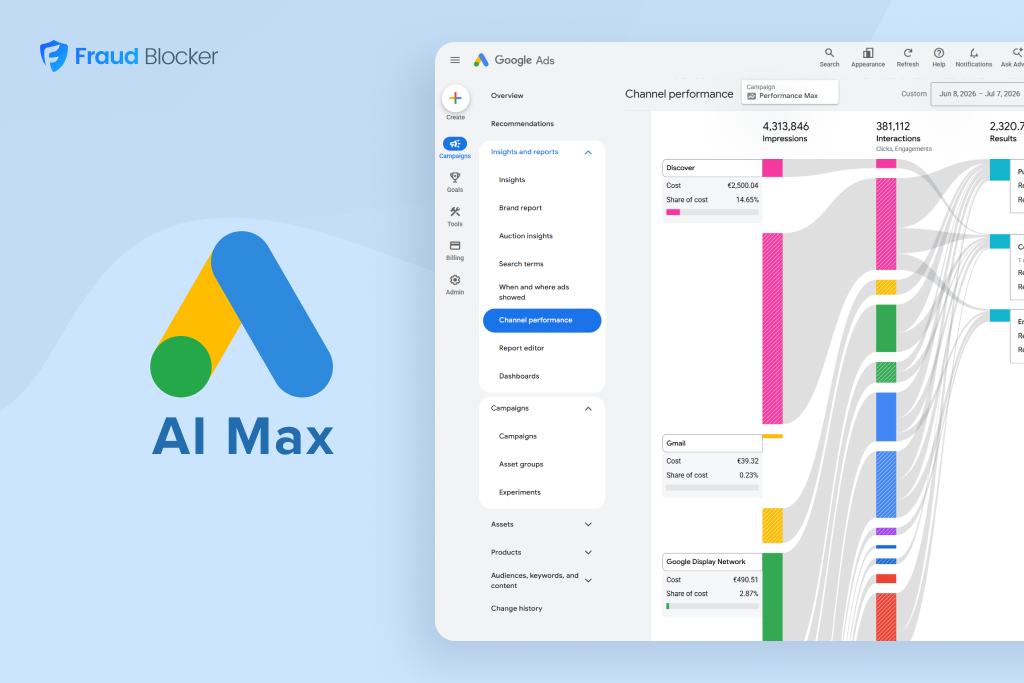
Performance Max (PMax) has changed a lot since we first reviewed it in 2023. It was just getting off the ground as a new campaign type, with some calling it a “half-baked rollout”. Since then, Google added useful controls including: campaign-level negative keywords, performance reporting by channel, search term visibility, brand exclusions, and much more.
Because of these changes, the old verdict that Performance Max is simply a “black box” just isn’t the case. It is more transparent and manageable than it used to be.
However, it still makes many important decisions for you. It determines where your budget runs, which creative combinations serve, and how aggressively it explores new inventory. The quality of the data you feed it also determines what its automation learns.
Our view on PMax heading into 2027: it can be a strong expansion channel for ecommerce, and a useful next step for mature lead-generation accounts.
It is much less forgiving when conversion tracking is weak, lead quality is invisible, or nobody reviews where the campaign is spending. Below are our learnings about Performance Max, how you can use it to your advantage, and best practices for maximizing its performance.
Performance Max is Google’s goal-based campaign type for serving ads across Search, Shopping, YouTube, Display, Discover, Gmail, and Maps. Advertisers provide conversion goals, budget, creative assets, product data where relevant, and audience signals. Google then automates the bidding, placement, audience expansion, and asset combinations.
Even though Performance Max can coordinate reach and learning across Google’s inventory, the trade off is giving up direct control in channel-specific campaigns.
| What We Found in 2023 | Status in 2026 | What It Means Now |
|---|---|---|
| Limited transparency | Improved | Channel performance, search-term, placement, and product reporting provide far more visibility than the original product. |
| Limited targeting controls | Improved, with some gaps | Campaign-level negative keywords and brand exclusions are available. Account-level IP exclusions cover Performance Max, but campaign-level IP exclusions do not. |
| Unpredictable creative combinations | Improved | Brand controls, asset reporting, and experiments help, but Google still assembles and serves combinations automatically. |
| Long, unstable learning periods | Largely unchanged | New campaigns and major changes still need time and enough conversion volume to stabilise. |
Google’s current Performance Max guidance states a few important points.
Google announced that Local Services Ads will transition into Google Ads as a specialized Performance Max campaign type with pay-per-lead goals. This is a phased rollout starting in the US, for certain service-based categories, and is expected to expand in phases.
The core model for LSAs remains different vs ordinary, click-based Performance Max campaigns. Eligible local service advertisers will continue to pay for leads, and ads will remain focused on Search and Maps. The main change is that campaign management, calls, messages, and lead reporting move into Google Ads vs the separate reporting UI.
The most urgent preparation step is simple: export historical Local Services Ads reports before the account migrates. Google says historical performance data will not move into the new campaign, and access to the old dashboard will end after the transition.
For local advertisers, traffic quality should be evaluated at the lead layer. The key questions are whether Google counts the lead as valid, whether the business can reach the prospect, and whether the lead becomes revenue.
Performance Max connects inventory that would otherwise sit in separate campaigns for Search, Shopping, Display, Discover, Gmail, Maps, and YouTube. That makes cross-channel discovery and remarketing easier to manage, especially for smaller teams.
This wide reach is useful when a customer’s journey does not begin and end with one search. A person might first see a video, return through a product ad, and convert after another interaction. Performance Max can optimize across that sequence using one goal and one budget.
Ecommerce gives Google’s system a relatively clear conversion signal: a purchase with a recorded value. If you have a strong Merchant Center feed with structured product information, Google can easily match to demand across its inventory.
Performance Max becomes especially useful for products that benefit from both demand capture and visual discovery. Standard Shopping is still valuable for control and comparison, but Performance Max expands reach to YouTube, Discover, and Display while retaining exposure to Shopping.
Remember that your feed is still the foundation for success in ecommerce. Accurate titles, product types, identifiers, images, prices, and availability matter more than a long list of broad audience signals. Audience signals are used as guidance for the system, not hard targeting boundaries.
For lead generation, the best sequence is usually to establish reliable Search campaigns and conversion tracking first. Once Search has captured the most obvious demand, Performance Max can explore incremental opportunities across Google’s other inventory.
Important note: that does not mean every account needs Performance Max. It means the campaign becomes more useful after the account can distinguish a valuable lead from a cheap form submission. Without that distinction, the system may find more of the action that is easiest to generate rather than the outcome the sales team values.
Performance Max often produces a lower blended cost per click than Search because it includes less expensive inventory. That can extend reach, but the lower price needs context. A cheap click that never had commercial intent is not efficient, and a low-cost form fill that cannot be contacted is not a qualified lead.
The relevant comparison is business value: qualified pipeline, profit, revenue, or another downstream outcome. Click price is useful for diagnosis, not as the final verdict.
Performance Max decides how the campaign budget is distributed across eligible inventory. The channel report can reveal what happened, but it does not give advertisers a channel-level budget dial inside the campaign.
This matters when cheaper inventory generates more volume but poor engagement. If your channel allocation shifts, you may see more clicks while qualified leads or purchases remain flat. Review channel performance alongside conversion quality rather than looking at traffic volume alone.
Google’s reporting can show you where ads served and how each channel contributed to measured results. But it still does not provide a visitor-level verdict that identifies every bot, competitor click, accidental tap, or click-farm visit.
Placement transparency and traffic verification are two different things, and solve different problems. Knowing where your ads served is helpful and explains how your ads were delivered, but you still need to understand whether an individual visit was genuine and commercially useful.
New campaigns and major edits need time and conversion volume before results stabilize. During that period, automated bidding explores inventory and audiences. Frequent structural changes can keep the campaign from settling, while a “set and forget” approach can allow weak traffic to continue for too long.
It’s important to define your measurement plan before launch, avoid unnecessary daily changes, and set a scheduled review cadence for traffic mix, lead quality, search terms, creative, and conversion goals – and do your best to stick to it.

Invalid clicks have a direct cost when the advertiser pays for traffic that has no chance of becoming a customer. And with Performance Max, your signals drive the quality of your traffic.
Smart Bidding learns from these conversion signals, and not from every click or conversion is equal.
When low-quality traffic generates spam forms, fake calls, shallow engagement events, or other actions – these may look like genuine conversion actions. If those actions are taken at face value, automated bidding can pursue more bad traffic with similar characteristics.
You can reduce that risk by optimizing toward real qualified leads, imported offline outcomes, purchase value, booked appointments, or other actions tied to business value. Google specifically recommends enhanced conversions for leads, appropriate lead categories, value-based bidding, first-party data, form validation, and tools such as reCAPTCHA or double opt-in.
Before adjusting audiences, assets, or bid targets, decide what the campaign should learn from. For ecommerce, that is usually a purchase with accurate value. For lead generation, it may be a qualified lead, booked appointment, or converted lead. For SaaS and B2B, it is often an offline stage from the CRM rather than an initial form fill.
Use primary conversion actions for outcomes you want bidding to optimize toward. Keep diagnostic or upper-funnel events secondary when they are useful for reporting but do not represent comparable business value.
Performance Max needs enough conversion volume to identify patterns. There is no universal minimum that guarantees success – because conversion delay, value distribution, market size, and budget all matter. The safer rule is to avoid launching with an outcome that happens too infrequently for the campaign to learn from.
If your final sales numbers are too low, use a meaningful intermediate event and graduate toward deeper outcomes as volume grows. For lead generation, import quality and revenue data as soon as possible so the campaign can distinguish a lead from a customer.
Many of the controls below were not available on launch in 2023, but they are available now. Use them to your advantage:
Performance Max campaigns should be built differently depending on your business. Below are a few common types, and ideas on how to build them for a higher chance of success:
Keep your product feed clean and segment asset groups around useful product or customer themes. Use accurate conversion values, monitor your product-level economics, and separate campaigns only when you need a distinct budget, target, market, or operational goal – avoid over-segmenting.
Make forms harder for bots and easier for qualified prospects. Use tools like Fraud Blocker’s Email Spam Protection, and include qualifying questions that improve sales follow-up. Import qualified and converted lead stages from the CRM. Measure your conversion rate from lead to opportunity or sale, not just cost per form fill.
Google says selecting lead-specific categories such as qualified lead, converted lead, book appointment, or request quote can activate protections designed for invalid lead traffic. Those controls are useful, but advertisers should still validate leads and review downstream quality.
Connect Google Ads to your CRM before using Performance Max as a core acquisition channel. You should try to send back qualified stages and revenue where possible, use first-party audiences built from your good customers, and account for long conversion delays. Use brand exclusions when you want a cleaner view of incremental demand.
If the account cannot report anything beyond a raw demo or trial form, focus on search campaigns first. Performance Max is more likely to help when it can learn which initial responses became real pipeline/revenue.
For many ecommerce advertisers, yes. For lead-generation and B2B advertisers, the answer depends on measurement quality. Performance Max becomes more useful when Search is established, conversion goals reflect real value, and your team can review both channel allocation and downstream outcomes.
Note: Performance Max is not a replacement for account strategy. It automates auctions and delivery, but it does not decide which leads matter to your business, repair a weak product feed, validate CRM data, or define acceptable traffic quality.
The best 2026 approach is neither blind adoption nor blanket rejection.
Use Performance Max where cross-channel reach creates real value to your business. Use Search or other campaign types where their control matters, and make the system learn from outcomes that represent real customers.
Yes. Google’s current documentation says Performance Max supports up to 10,000 campaign-level negative keywords. Account-level negative keyword lists can contain up to 1,000. Negative keywords do not match close variants, so include important spelling variations.
Yes, at the account level. Google says account-level IP exclusions apply across all campaigns, including Performance Max. Campaign-level IP exclusions are not available for Performance Max.
Check where the traffic is serving, which conversion actions are primary, and what happens to leads after submission. Cheap traffic can increase click volume without increasing business value. Spam forms or weak conversion goals can also teach bidding to pursue the wrong outcome.
Usually not. Search provides direct control over high-intent demand and is often the best foundation for lead generation. Performance Max can complement Search by extending reach across Google’s other inventory.
Connect advertising data to downstream outcomes. Enhanced conversions for leads and offline conversion imports help Google distinguish qualified prospects and customers from raw form fills.
Export historical Local Services Ads reports. Google says that performance history will not transfer into the new pay-per-lead Performance Max campaign.

ABOUT THE AUTHOR
Brandon is the co-founder and Chief Growth Officer at Fraud Blocker with 15+ years of performance marketing experience and $100M in direct ad spend management. He specializes in driving growth and maximizing ROAS across B2B SaaS, fintech, marketplaces and more.
Brandon is the co-founder and CGO at Fraud Blocker with 15+ years of performance marketing experience. He specializes in driving growth and maximizing ROAS across B2B SaaS, fintech, marketplaces and more.