












Performance Max Pros and Cons in 2027: What Google Fixed and What Advertisers Still Need to Control
Performance Max has improved a lot since 2023. See what Google fixed, what still needs your attention, and how to run PMax effectively in 2027.



Our AI agents catch the sophisticated fraud others miss and it tells you why. Learn more here.



Click fraud is costing advertisers billions in loses. Learn more here.

Click fraud is costing advertisers billions in loses. Learn more here.



Read our in-depth study by independent research firm Juniper Research.



Every year, millions of old smartphones are traded in, sold secondhand, or handed off to recycling programs. Samsung’s own recycling program alone has collected more than 1.3 billion pounds of e-waste in the U.S. since 2008.
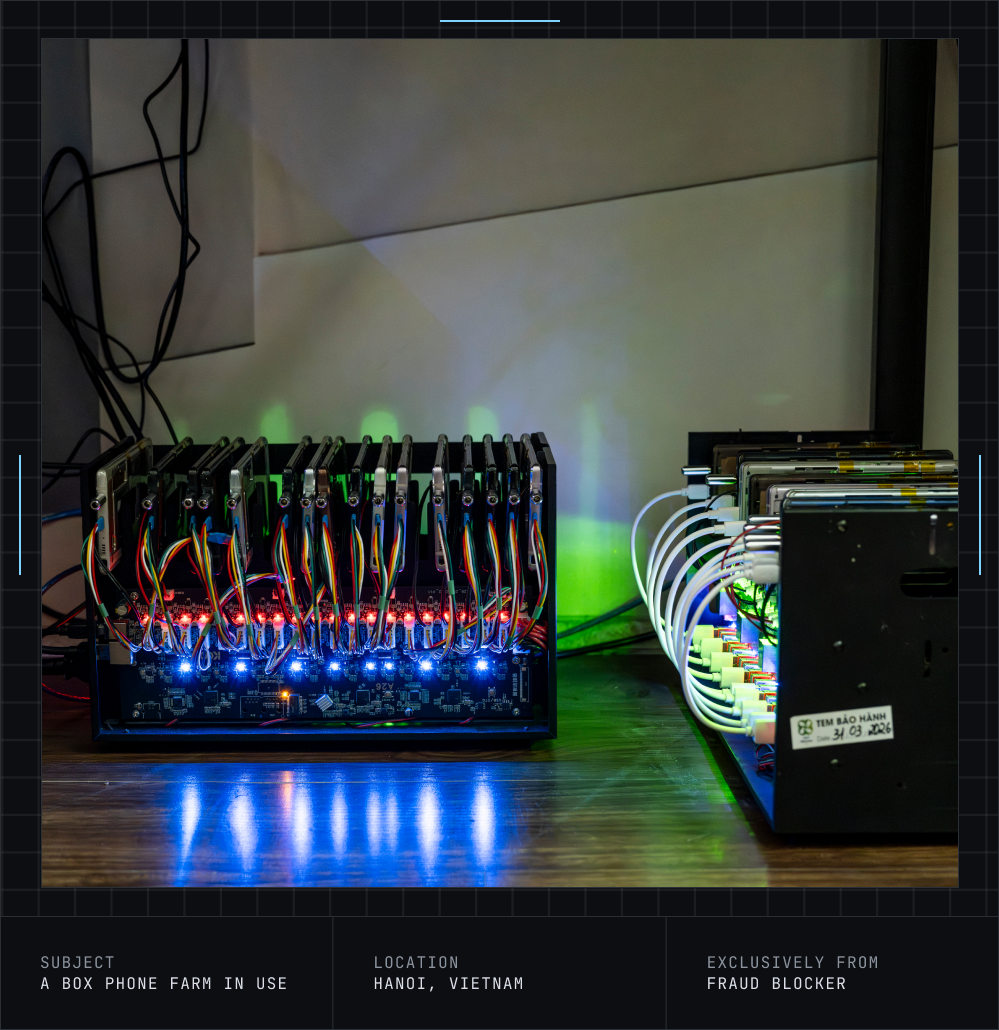
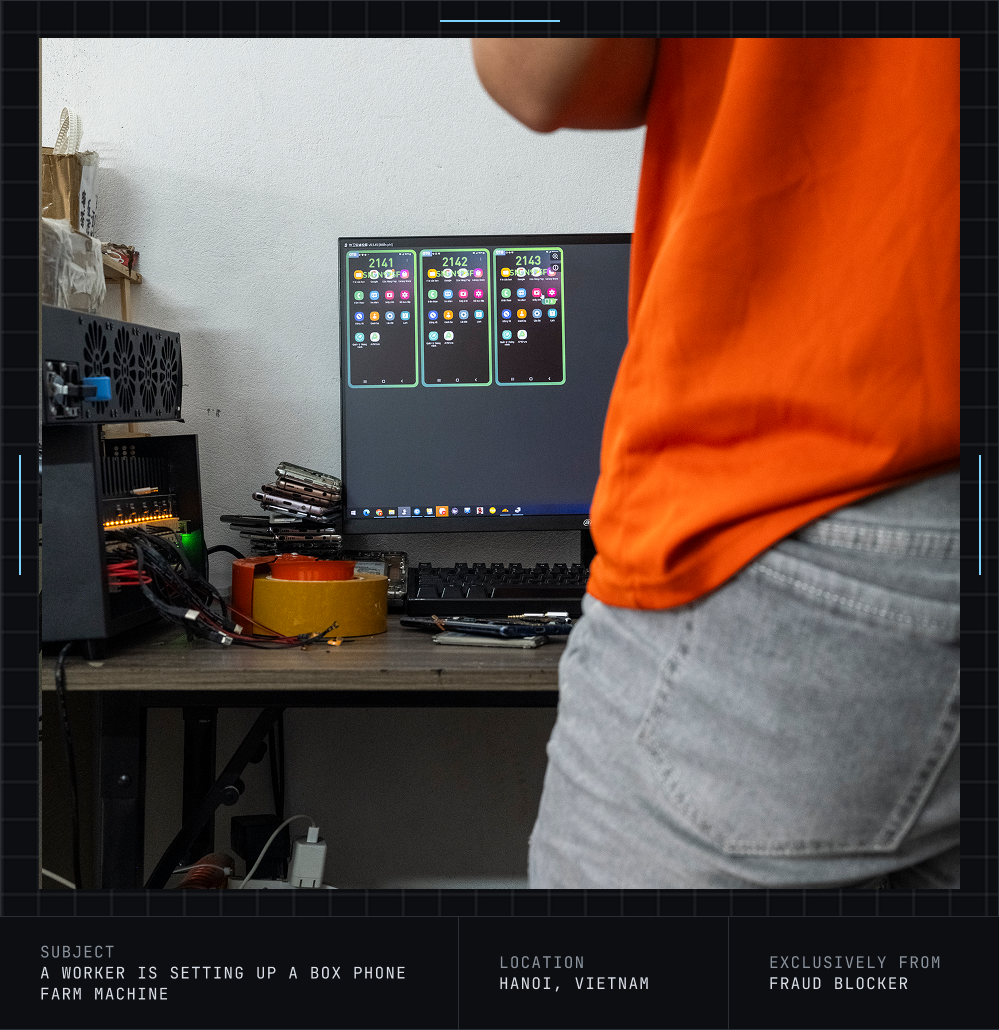
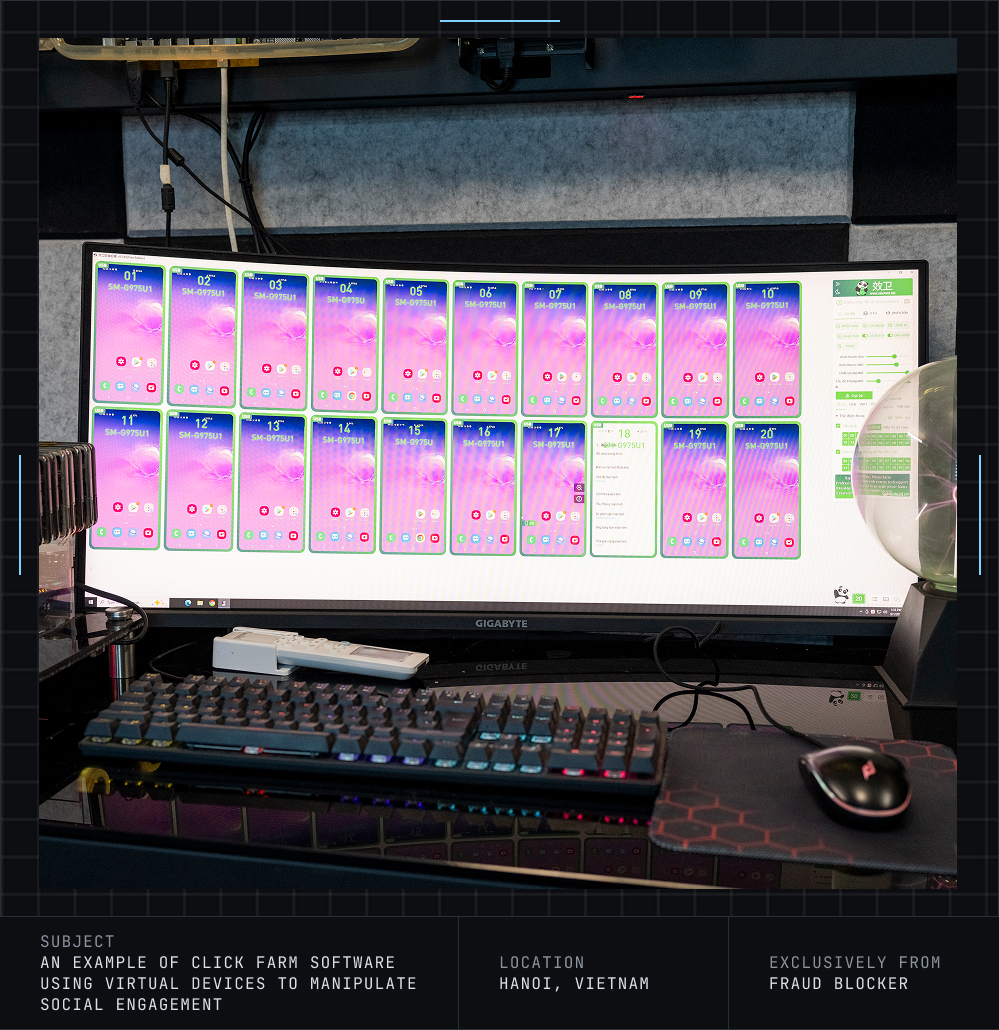
But our reporting shows that a significant number of old devices don’t get recycled at all. Instead, they end up in “box phone farm” units specifically designed to fake social media engagement, game algorithms, and profit their operators. These phones are bought for a fraction of their original price, stripped down, and wired into rigs that power much of the fake engagement on social media today.
Our team visited several of these operations in Vietnam last summer and saw the devices firsthand. Almost all of them were the same brand.
The overwhelming majority of phones we saw in the farms were Samsung devices.
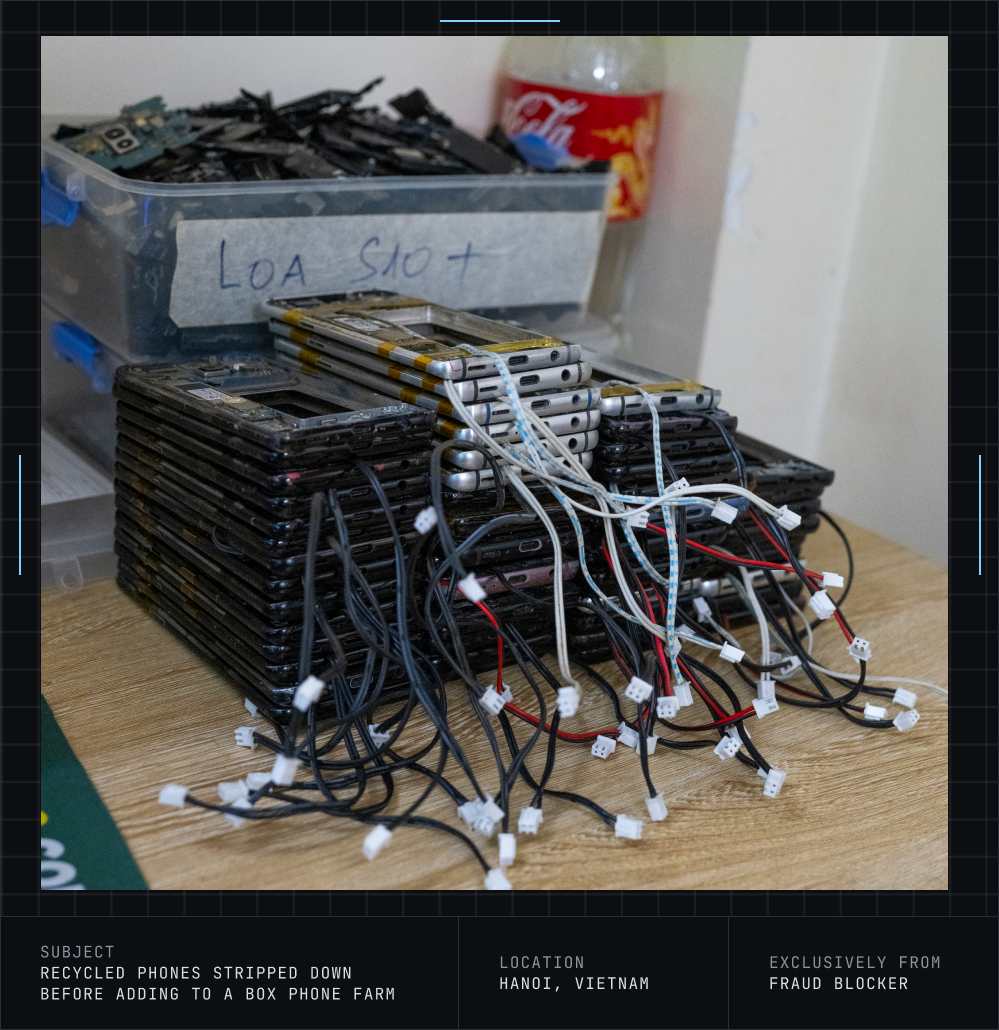
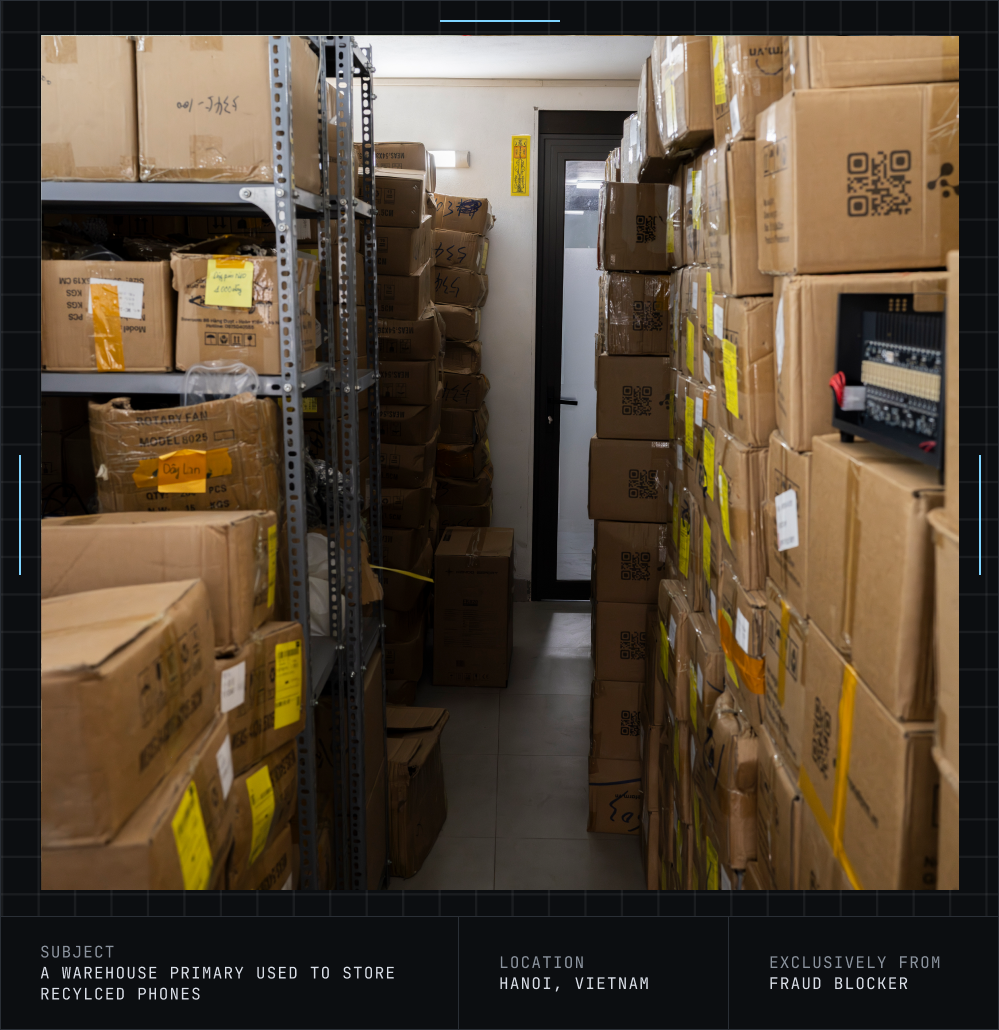
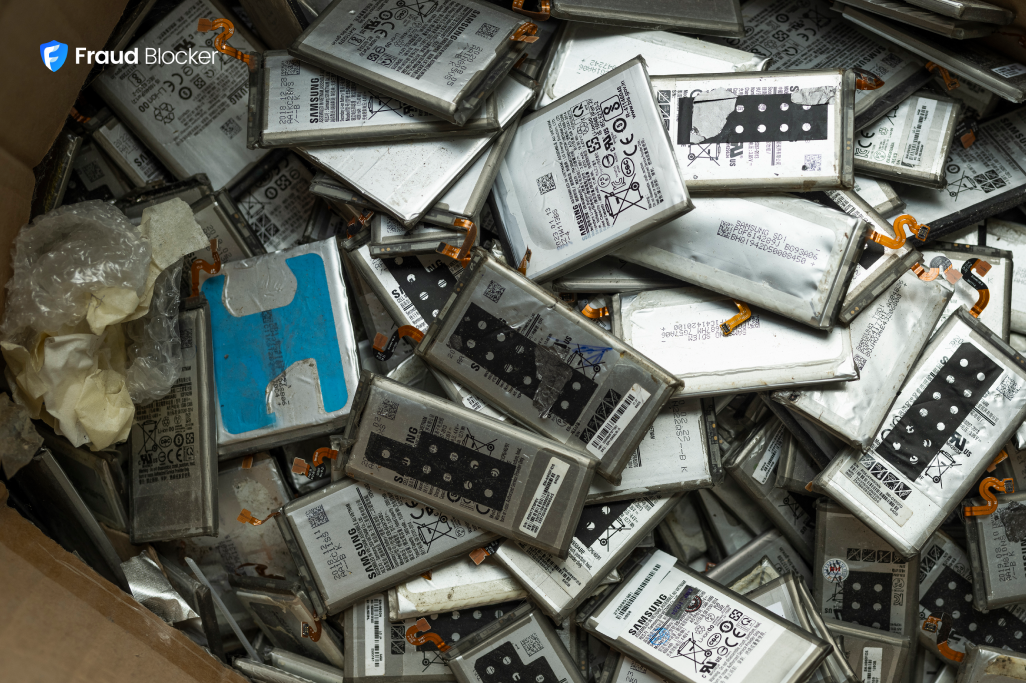
There were dozens of removed batteries lying in boxes and speaker modules stacked in boxes. We saw the guts of older-looking devices alongside newer ones like the 2019 S10+.
Samsung has official channels for old phones like these. Samsung Electronics Vietnam operates “Samsung Recycle,” an e-waste program that lets consumers donate old devices. They can also trade them in for credit toward a new phone.
But our findings suggest that a large number of secondhand Samsung devices don’t go into that pipeline and instead end up in box phone farm units. Here, they are repurposed to power fake profiles and farm engagement online.
According to the operators we spoke to, Samsung devices are favored for three reasons: availability, price, and ease of customization.
Availability comes down to where the phones are made. Samsung operates six manufacturing facilities across four Vietnamese locations: Bac Ninh, Thai Nguyen, Hanoi, and Ho Chi Minh City. These keep the supply of both new and secondhand devices high.
“Vietnamese labor is cheap, so [Samsung] chose Vietnam as a production location,” one operator explained. “Therefore, prices are good, and it’s easier to source.”
This high availability translates to low device prices, whether operators are buying directly from individuals or getting bulk supply from middlemen. A lower-end device in this market can cost as little as a few hundred thousand Vietnamese dong, roughly $4 to $8. But our team found a box farm of 20 S10s, including all hardware accessories, selling for about $1,000.
However, Android’s openness is what makes a phone compatible with the box farm setup in the first place. Operators can root the device and install custom software, something they said is far easier to do than on an iPhone, which “doesn’t allow customization and hacking.”
Once a phone has been stripped down to its essentials, operators jailbreak each one to gain root access and install custom software.
Operators prefer real devices because of how bot detection works. Platforms build a composite fingerprint from dozens of hardware and behavioral signals, including Device ID, IP address, geography, and cross-reference it against account age and history. A real phone with a real hardware signature passes many of those checks by default.
Mike Schrobo, founder and CEO of Fraud Blocker, whose team conducted this investigation, put it simply: “There’s realistically no way to tell fake users apart from real ones through devices alone. This is why independent fraud protection services, and even bot filters on social media platforms, use several data points to catch these fake accounts”.
Devices alone aren’t the whole system, though. Operators use proxies to mask location and allow a single device to connect from anywhere in the world.
Fraud Blocker’s own analysis of 200 million ad clicks found one device that appeared to click through from 87 different countries within 72 hours, a feat that would be impossible for any real user to accomplish.
Operators use AI to handle much of this proxy rotation automatically, along with account “seeding”: the process of building out a fake profile with its own content preferences and comment history to improve authenticity. “You can have AI doing all the tasks like nurturing accounts like a real person and automatically posting comments,” one operator told us. “This boosts engagement on pages and live streams.”
Click farms once relied on low-wage workers to manually engage with posts, but that role is now largely automated with AI.
Engagement farming is by far the most common use case for these box phone setups, with TikTok and Facebook being named often as the targets, particularly for customers in Southeast Asia. One operator running a smaller setup told us they could efficiently manage up to 500,000 accounts per farm, remarking that, in theory, there’s no limit. That puts the sheer volume of fake profiles online into perspective.
Promoting e-commerce sales is also a high-demand use case, with Shopee named as the platform of choice. The process is deceptively simple: Operators are paid to boost a livestream with fake accounts until the platform’s algorithm picks it up and starts recommending the stream to real users. These individuals are then funneled toward a Shopee storefront. The businesses behind these campaigns sell real products but use box phone farms to game the algorithm and drive traffic.
The clients paying for these are very diverse. According to one operator, “it could be in Vietnam or abroad, but mostly in Southeast Asia. We have a lot of clients in France, Australia, and Japan—mostly because the technology there is pretty advanced.”
Client sizes also range widely from individuals boosting a personal account to businesses that, according to one operator, maintain “a warehouse full of our boxes,” running their own dedicated phone farm operation.
Not every question from our team received a straight answer.
When we asked whether clients ever paid to have ads clicked on, the response was evasive and brief. “Our system creates a bunch of fake accounts,” one operator said. “I don’t want to talk about what those accounts are doing.”
The tone also shifted when we asked about politics. With the U.S. elections approaching, we wanted to know whether clients ever requested help with political ads or campaign-related engagement. The answers were always avoidant. “There are lots of scammers who want this technology. I don’t sell to them,” one operator said, before moving the conversation to how they screen buyers before selling them box phone farms.
No operator confirmed running political engagement campaigns or targeting paid ads. But the resources to do it clearly exist and trace back to a rack of stripped-down Samsung phones. The same S10s that pass platform fingerprint checks will slip through platform filters and can be used to inflate political post engagement or drain Google Ads budgets.
The next time you trade in your Samsung device, remember that millions just like it could be supporting the infrastructure of fake engagement online today.

ABOUT THE AUTHOR
Matthew is the resident content marketing expert at Fraud Blocker with several years of experience writing about ad fraud. When he’s not producing killer content, you can find him working out or walking his dogs.
Matthew is the resident content marketing expert at Fraud Blocker with several years of experience writing about ad fraud.